Gold Price Today: Current Rates and What to Expect Before the Fed Meeting
Current Gold Prices
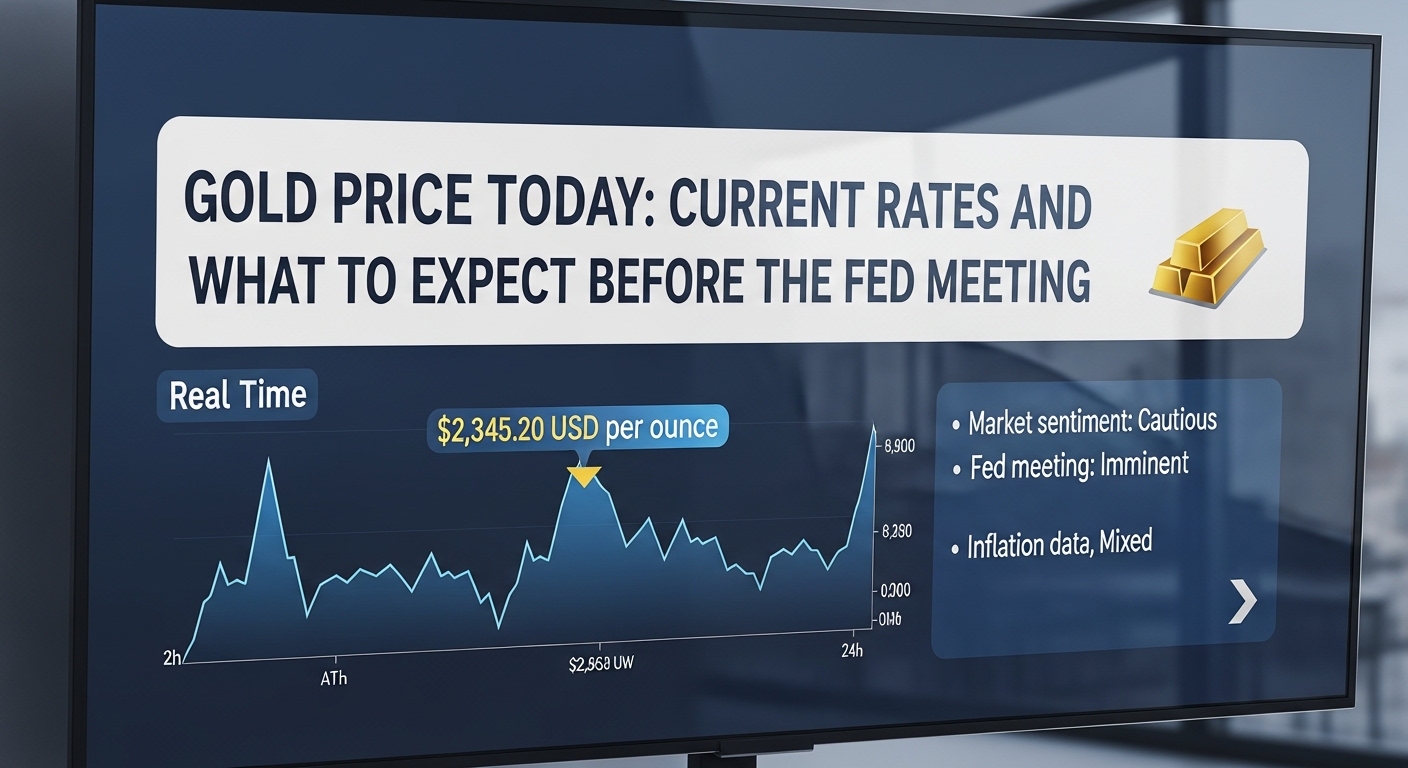
As of today, the spot price of gold remains a focal point for investors and market watchers, fluctuating around $1,845 per ounce. This level indicates a slight increase from last week’s average, where gold traded in the $1,820 to $1,830 range. The continuous movement in gold prices reflects a mix of geopolitical tensions, inflation concerns, and market sentiment about the Federal Reserve’s impending decisions. Investors often view gold as a safe-haven asset, especially during turbulent times, reinforcing its importance in today’s market.
Factors Influencing Gold Prices
-
Inflation and Economic Data:
- Inflation plays a significant role in shaping gold prices. With inflation rates hovering around 3.7% in recent months, fears of rising costs push investors toward gold as a hedge. Monthly reports showcasing inflation data often lead to swift reactions in the gold market.
- Additionally, the recent Consumer Price Index (CPI) report indicated that inflation remains persistent, which can lead to increased buying interest in gold.
-
Federal Reserve Policy Decisions:
- The anticipation surrounding the Federal Reserve’s monetary policies directly impacts gold prices. Before the upcoming Fed meeting, scheduled for next week, traders are keenly observing economic indicators that may reveal the central bank’s next move.
- Market speculation suggests that the Fed may consider maintaining interest rates at current levels or possibly implementing a rate hike. Higher interest rates tend to strengthen the dollar, making gold more expensive for foreign investors and potentially leading to a decrease in demand.
-
Global Tensions and Uncertainty:
- Geopolitical issues, such as the ongoing conflict in Eastern Europe and rising tensions in Asia, increase the appeal of gold as a safe asset. Escalating uncertainties often drive investors to purchase gold, leading to price increases during crisis periods.
- Recent developments in global trade agreements and political stability also play crucial roles, as mistrust in governance can result in higher gold buying.
- Physical Demand:
- Demand from key markets like India and China, where gold is traditionally favored for jewelry, plays a significant part in global gold consumption. Seasonal festivals in these countries can affect demand significantly, thereby impacting prices.
- The recent easing of COVID-19 restrictions has rekindled gold purchases in these major markets, showing an uptick in both retail and wholesale demand.
Market Sentiment Analysis
Investor sentiment is currently mixed as traders prepare for the Federal Reserve’s upcoming meeting. Surveys indicate a cautious stance among traders, with many seeking to understand the potential implications of the Fed’s policy decision on markets, particularly on interest rates. News of stronger-than-expected economic data has led some to anticipate that the Fed may take a more hawkish stance, possibly influencing gold prices downward.
Conversely, the long-term outlook for gold remains bullish among certain analysts, who expect sustained higher inflation and global uncertainty to support elevated prices. Technical analysis indicates that gold must hold above key resistance levels around $1,850 per ounce to attract further investor interest.
Technical Analysis
From a technical standpoint, gold has reached a critical juncture, navigating through significant support and resistance levels. The immediate support level is around $1,820, while resistance is solidified at $1,850. Moving averages such as the 50-day and 200-day moving averages highlight trends and can provide traders with insights on potential shifts.
As traders analyze charts, the Relative Strength Index (RSI) indicates whether gold is overbought or oversold, providing further cues for decision-making. Currently, with the RSI hovering near neutral, a decisive move above $1,850 may suggest bullish momentum, while a drop below $1,820 could indicate a reversal.
Future Projections
The short-term projections for gold prices remain speculative, largely hinged on the Fed’s decisions. If the Fed opts to maintain or lower interest rates, gold may see a resurgence as a preferred investment vehicle. However, any indication of interest rate hikes could provoke a downturn, with prices potentially testing the $1,800 support level again.
Looking further down the line, expert opinions suggest that if inflation continues unabated and geopolitical tensions magnify, gold could see significant upward momentum. Projections from analysts suggest potential highs of $1,900 to $2,000 per ounce within the next few months if current trends persist.
Investment Strategies
For investors considering gold, various strategies can be employed. Some opt for direct investments in physical gold or gold ETFs, while others may choose to trade futures or options contracts. Diversifying portfolios with gold can serve as a hedge against volatility in traditional stock markets and currency fluctuations.
Investors are advised to stay informed on economic indicators, including employment rates, GDP growth, and inflation data, as these will significantly influence market reactions. Engaging financial advisors and employing careful technical analysis will also help in making informed decisions as the Fed meeting approaches.
Conclusion
Gold remains a key asset with varying factors influencing its price, from inflation rates to geopolitical tensions and market sentiment. As the Fed meeting draws near, all eyes will be watching how these elements play out in the coming days. Investors must approach the gold market with both caution and an informed strategy to navigate potential volatility and capitalize on the opportunities that arise.